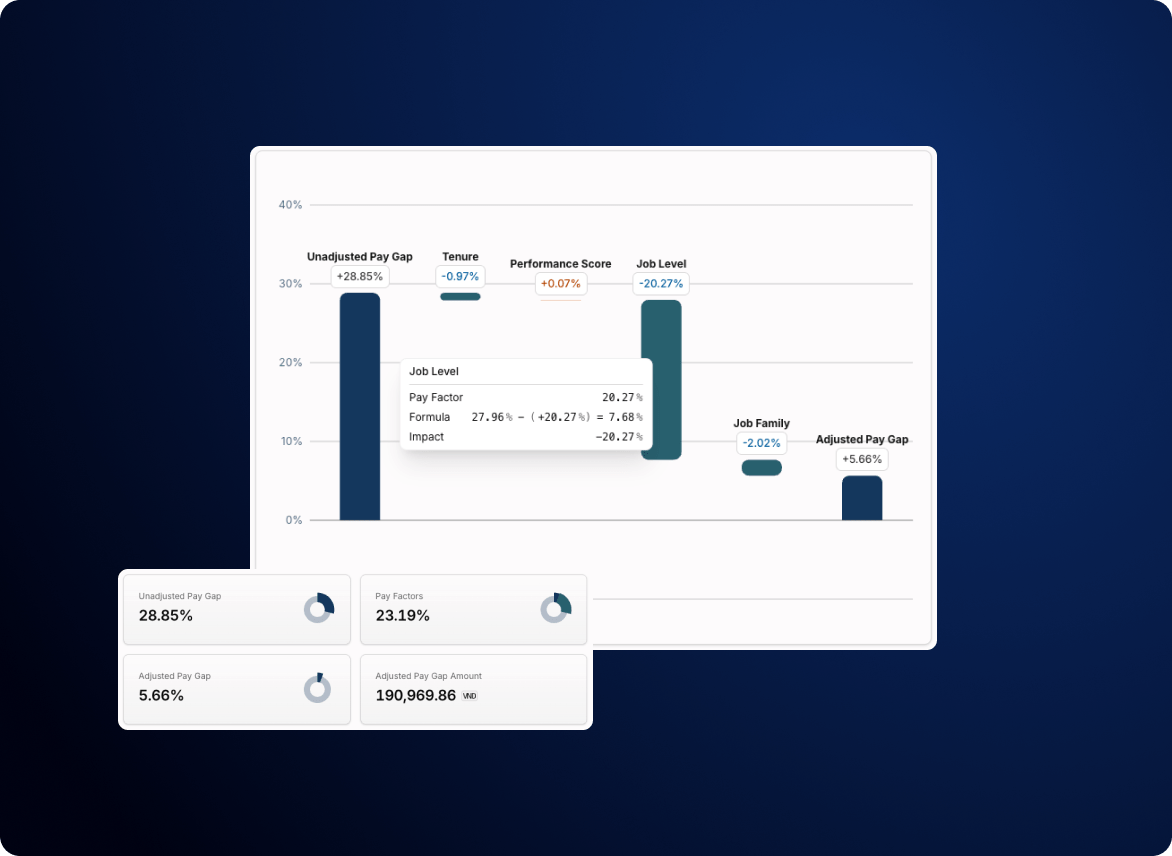
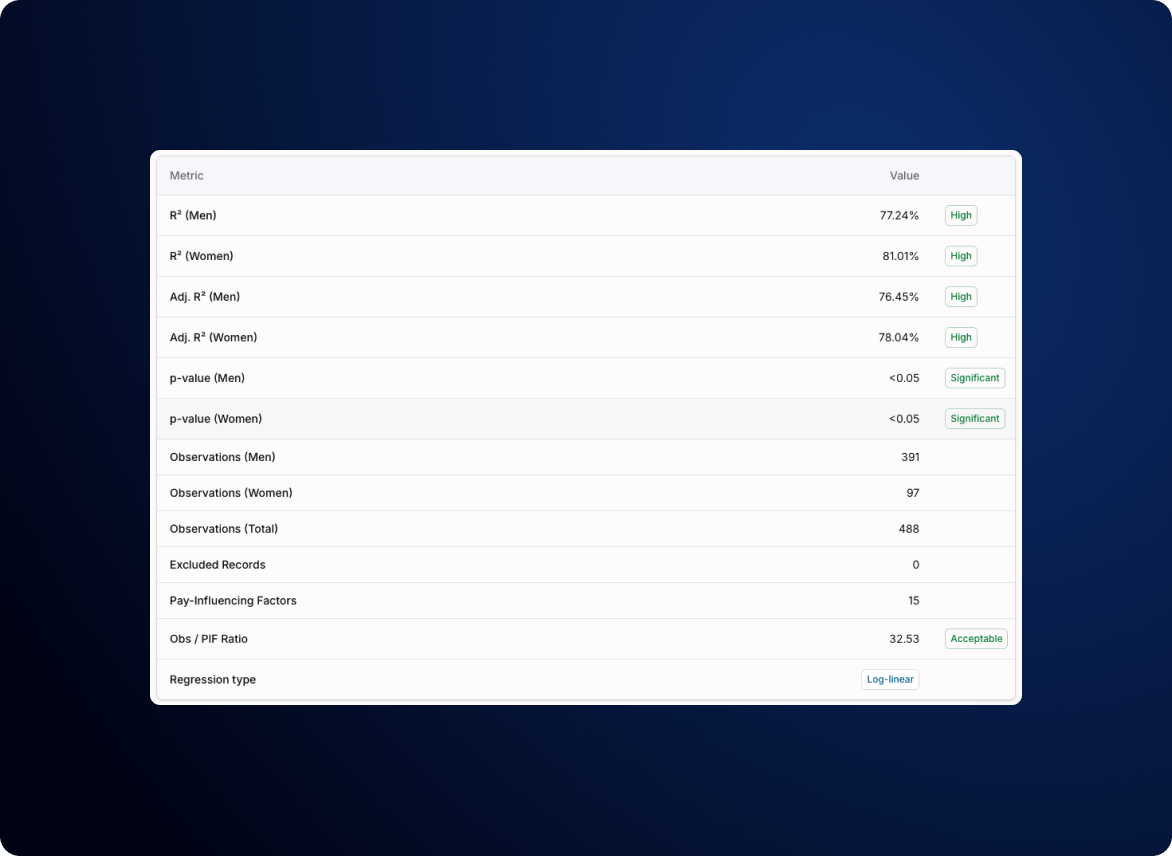
When running a Pay Equity analysis, it is important to do an apples-to-apples comparison to understand how much of the gap comes from the gender. This is done with an adjusted pay gap analysis. PayGap turns advanced regression models into easily understood gaps that you can use in your pay transparency project.

The Adjusted Pay Gap module, relies on best-practice analytical models for determining the actual pay gap. The calculations follow the Blonder Oaxaca Decomposition model, which allows PayGap to not only determine the adjusted pay gap, but also show how much different factors can help you explain pay differences.
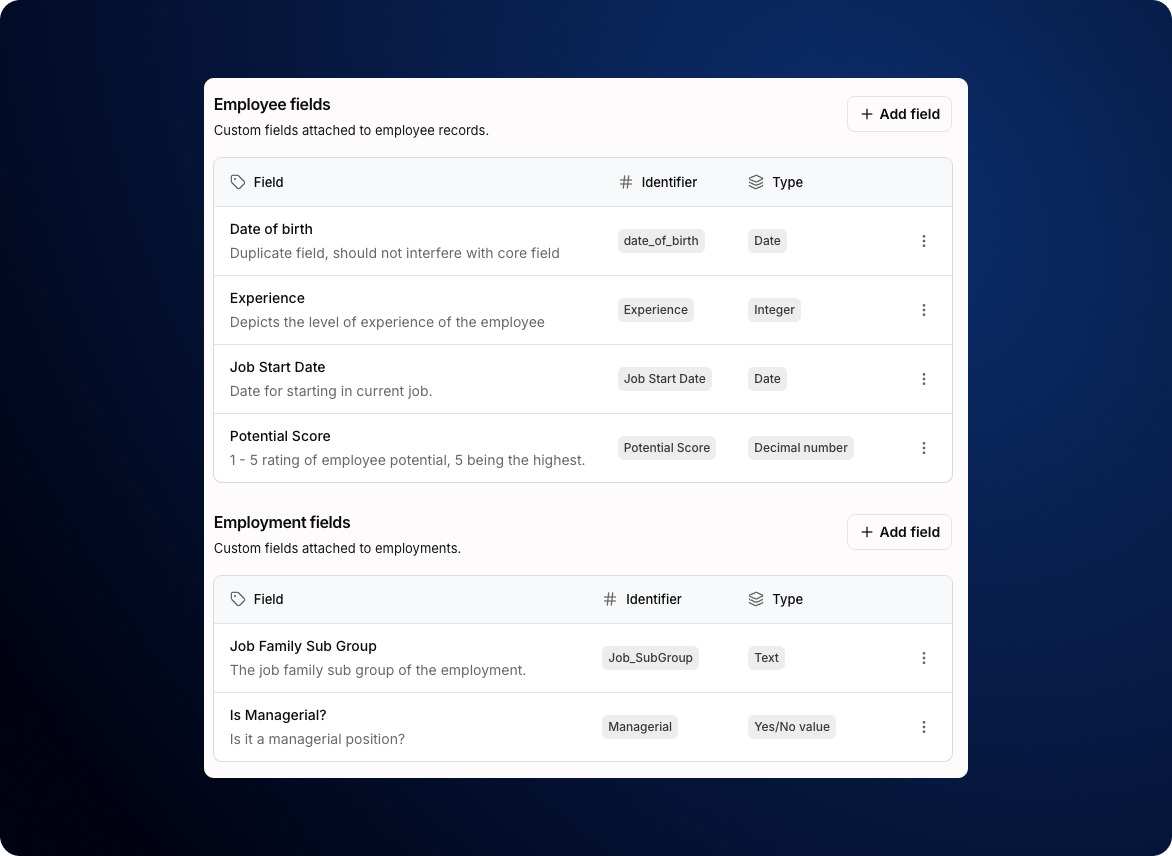
No company is the same, and therefore models and analysis must be adapted to each company for a reliable result. This is at the core of the PayGap platform, with Custom Fields. This allows you to use whatever data you want, which can then be used throughout the platform.
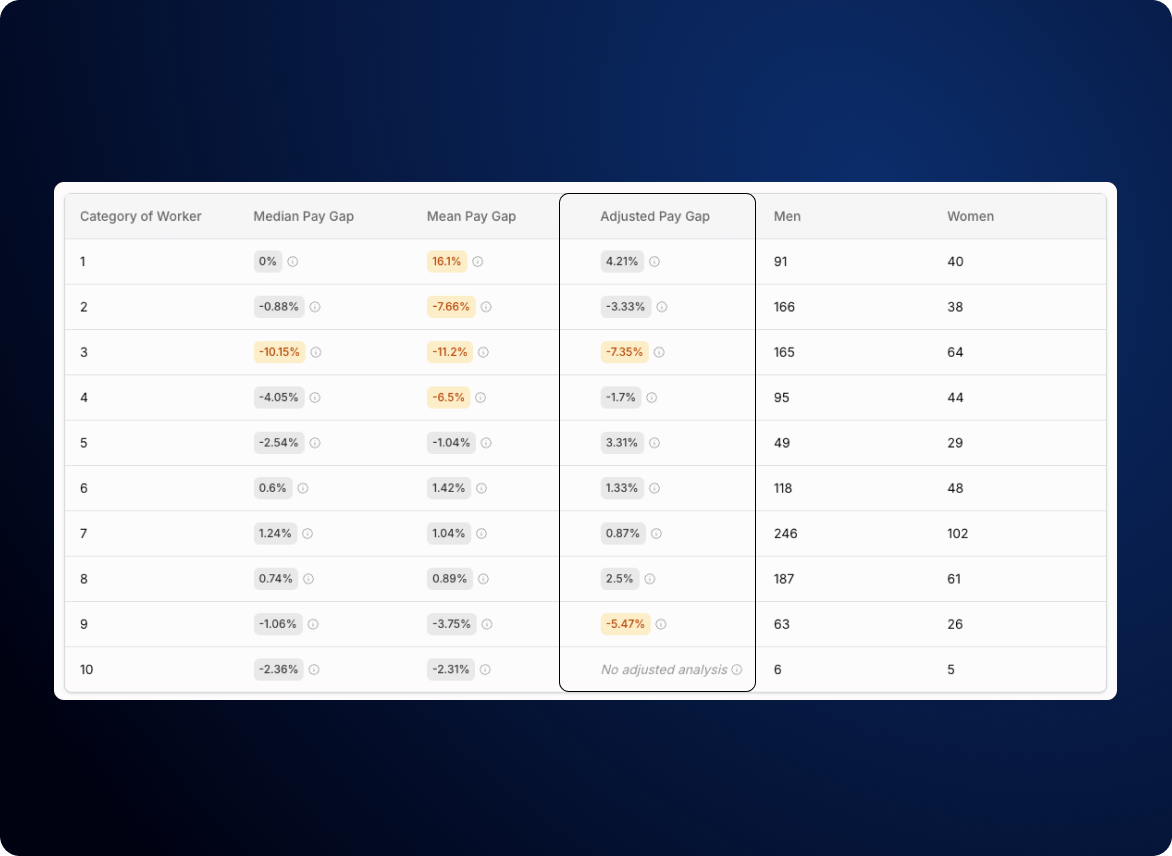
Gaps are often assessed at a high-level, but under EU Pay Transparency, it is essential that the analysis is run at the 'work of equal value'-group level. PayGap does this natively, and provides gap analysis, including unadjusted and adjusted, for all of the 'work of equal value'-groups.
In addition to calculating the gaps required for compliance, PayGap natively supports gap analysis on the pay component level (e.g., base pay, pension, or total pay).
The Pay Transparency Directive is comprehensive and includes many complex elements. For organizations subject to this legislation, a systematic approach is essential to ensure compliance and maintain it over time.

The EU directive varies across countries. We continuously monitor these differences and integrate them into the platform to ensure compliance.

We support you end-to-end with compliance, by ensuring your have access to the right workflows needed for compliance.


