May 4, 2026
Category:
Pay Equity LegislationAuthor:
Jovita Valatkaitė
/
Associate Partner
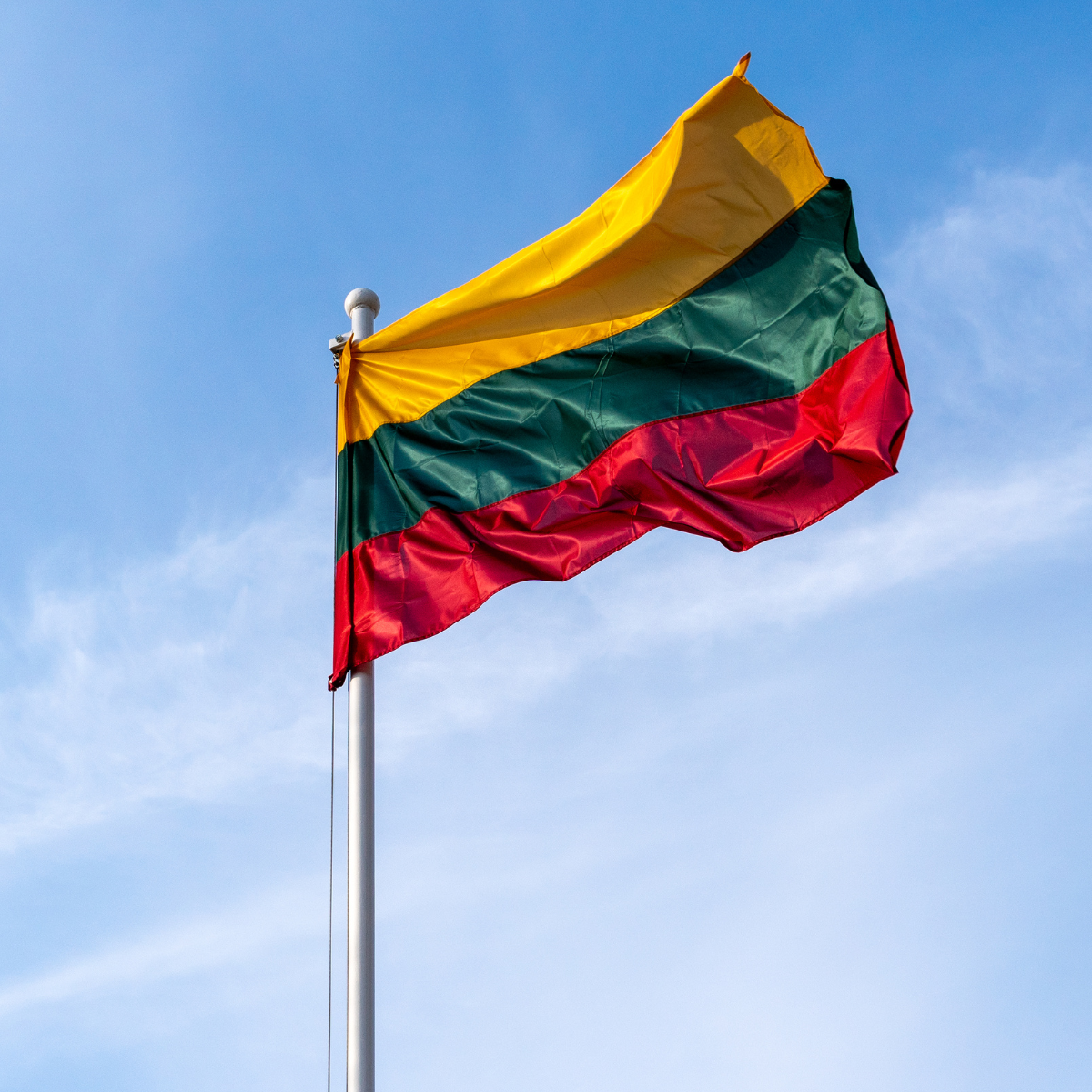
On 7 June 2026, Lithuania will join the wave of EU Member States implementing the landmark Pay Transparency Directive. The new amendments to the Lithuanian Labour Code are not just a box-ticking exercise - they represent a fundamental shift in how pay is discussed, reported, and enforced across the country. Here's what you need to know.
Equal pay, defined and enforced
At the heart of the new law is a reinforced principle: men and women mustr eceive equal pay for equal work or work of equal value. This is not a new in concept, but the Lithuanian amendments sharpen the definitions considerably.
"Equal work" is now defined as work that is so similar, based onobjective criteria, that employees could be interchanged without the employer incurring significant additional costs. "Work of equal value" means work requiring no lesser qualifications and of no lesser significance to the employer in achieving its business objectives. These definitions are designed to prevent employers from dressing up pay disparities behind superficial differences in job titles.
Crucially, when assessing whether employees are in a comparable situation, courts are no longer limited to comparing workers employed by the same employer at the same time. The law introduces the concept of a "single source ofpay conditions" - where a parent company centrally sets pay conditions formultiple subsidiaries, comparisons can be drawn across those entities. And if no direct comparator exists in the workplace, employees can rely on statistical data or hypothetical comparisons to demonstrate discrimination.
A new pay system architecture
One of the most significant practical changes concerns employers' pay systems. Under the amended Article 140 of the Labour Code, every employer must establisha remuneration system that classifies positions into groups based on objective, gender-neutral criteria. The law is notably specific about what these criteria must encompass: skills (including interpersonal and collaborative skills), qualifications, effort (covering physical, mental, and emotional resources), responsibility, and working conditions such as environment, intensity, and risk. Positions involving the same or equal-value work must be assigned to thesame group.
The pay system must also set out pay forms, salary ranges (minimum and maximum), supplementary pay criteria, bonus grounds, and salary progression rules tied to objective, gender-neutral factors. There is a notable concession for smaller businesses: employers with fewer than 50 employees are exempt from the requirement to include salary progression criteria and procedures in theirpay systems.
Employers must have their pay systems approved - or reviewed and, where necessary, amended - by 6 June 2026. Where a collective agreement exists, thepay system established in that agreement now applies to all employees at the workplace, not just union members.
Sodra steps in: centralised data collection and reporting
Perhaps the most distinctive feature of Lithuania's transposition is thecentral role assigned to the State Social Insurance Fund Board, known universally in Lithuania as "Sodra". Rather than placing the full burden of calculating and reporting pay gap indicators on employers themselves, Lithuania has opted for a centralised model in which Sodra collects the raw data, crunches the numbers, and delivers the results back to employers.
Every month, employers must submit data to Sodra covering employee pay, working hours, and the position group assigned under their pay system. Sodra then uses this data to calculate a suite of indicators for each employer, including:
- The overall gender pay gap;
- The gender pay gap including supplementary pay (bonuses, premiums, andsimilar);
- The median gender pay gap, both with and without supplementary pay;
- The proportion of men and women receiving supplementary pay;
- The distribution of men and women across pay quartiles; and
- The gender pay gap by position group, broken down into basic and supplementary pay.
This centralised approach is notable because the Directive itself does not prescribe how data should be collected - Lithuania has made an implementation choice that shifts much of the administrative burden away from employers and onto a state institution. It is a pragmatic solution that may appeal to smaller employers in particular, though it does require employers to ensure they are submitting accurate, timely data each month.
Reporting frequency: size matters
The frequency with which employers receive and must act on these indicators depends on the number of insured persons they employ:
- 250 or more insured persons: Annual reporting. Sodra calculates and publishes the indicators every year.
- 100 to 249 insured persons: Reporting every three years.
- Fewer than 100 insured persons: No mandatory reporting, but employers may voluntarily opt into the same reporting regime as the 100-249 category.
There are also staggered deadlines for first-time reporting. Employers with 150 or more insured persons must receive their first set of calculated indicators by 7 May 2027, whilst those with 100 to 149 insured persons have until 7 May 2031. This phased approach gives smaller organisations more time to prepare, though some commentators may question whether a five-year lead time for the smallest cohort is sufficiently ambitious.
Public disclosure: your pay gap, out in the open
Sodra will not keep the data to itself. For employers with at least 8 employees (more than 3 of each gender), Sodra will publicly disclose the average hourly pay for men and women on a monthly basis. The broader suite of pay gap indicators (points 1 to 6 above) will be published annually for employers with 250 or more insured persons, and every three years for those with 100 to 249. This public disclosure mechanism is a powerful accountability tool - prospective employees, journalists, regulators, and competitors will all be able to see how individual employers stack up.
What employees can find out - and what employers must tell them
The law significantly expands individual employees' rights to pay information. Every employee now has the right to receive, in writing, data on their own annual pay, average monthly hourly pay, and average annual hourly pay, as well as the corresponding averages for all employees of the same gender in their position group. Employers are required to inform employees annually about this right and how to exercise it.
When an employee makes a request, the employer must provide the data within one month. If the data received is inaccurate or incomplete, the employee -personally or through employee representatives - can demand further clarification, which must be provided within two months of the original request.
Where providing individual pay data could directly or indirectly reveal the payof an identifiable colleague, the data must instead be routed through employee representatives, the State Labour Inspectorate, or the Office of the Equal Opportunities Ombuds person. If those bodies identify a pay gap of 5% or more inthe relevant position group, they will inform the employee and advise them on next steps - without revealing the actual pay of individual colleagues.
The 5% trigger: joint pay assessment
Where the reported indicators reveal a gap of at least 5% in average pay between men and women in any position group, and the employer cannot justify iton objective, gender-neutral grounds, a joint pay assessment must be conducted in cooperation with employee representatives. This assessment is specifically triggered when three conditions are met: the 5% gap exists, the employer has not justified it, and the employer has failed to correct it within six months.The assessment must be submitted to employees, employee representatives, and the State Labour Inspectorate.
If an unjustified pay gap is identified, employers must rectify it within six months from receiving the relevant data, working collaboratively with employee representatives.
Enforcement and remedies: real teeth
The Lithuanian legislation does not just create transparency obligations - it backs them up with meaningful enforcement mechanisms.
If a dispute resolution body finds that an employer has breached the equal pay obligation, the employee is entitled to full compensation. This includes notonly recovery of unpaid wages or benefits in kind, but also compensation for lost opportunities, non-pecuniary damage, and other harm caused by factors including intersectional discrimination.
The law also introduces late payment penalties specifically for equal pay violations. Where the employer has failed to pay equal remuneration during the employment relationship, late payment interest applies; where the employment has ended, the standard penalty provisions for late settlement kick in.
Courts are given a new discretion in pay discrimination cases to depart from the usual rules on the allocation of litigation costs, taking into account whether each party's procedural conduct was appropriate and whether they acted in good faith. This is an important protection for employees who might otherwise be deterred from bringing claims by the fear of adverse cost consequences.
What makes Lithuania's approach stand out?
Several features of Lithuania's transposition are worth highlighting as potentially going beyond the minimum requirements of the Directive.
First, the "centralised role of Sodra" in collecting, calculating, and even publishing pay gap indicators is a distinctive implementation choice. Many other Member States are likely to place these obligations directly on employers, making Lithuania's model comparatively employer-friendly in terms of administrative burden - but also more reliant on the accuracy and timeliness ofdata submitted to a state institution.
Second, the "monthly public disclosure" of average hourly pay by gender for employers with at least 8 employees goes beyond what the Directive requires in terms of frequency and coverage. This is a notably aggressive transparency measure that will make pay data available to the public on a near-real-timebasis.
Third, the explicit "prohibition on asking applicants about their payhistory" is a clear, bright-line rule that removes ambiguity and aligns Lithuania with emerging best practice internationally.
Fourth, the detailed specification of "gender-neutral job evaluation criteria" - including, notably, interpersonal skills, emotional effort, and collaborative abilities - reflects an intentional broadening of how "equal value" is assessed, moving beyond traditional metrics that have historically undervalued work disproportionately performed by women.
The bottom line
Lithuania's transposition of the Pay Transparency Directive is comprehensive, carefully structured, and - in several respects - forward-looking. The centralised Sodra model is a pragmatic innovation that could serve as a template for other Member States still working on their own transposition. For employers, the message is clear: the era of opaque pay practices is ending. Pay systems must be transparent, objectively justified, and gender-neutral - and the data to prove it will be collected, calculated, and in many cases published, whether employers like it or not.
For employees, the new law provides powerful new tools to understand, question, and challenge pay disparities. The combination of individual information rights, centralised reporting, public disclosure, and robust enforcement mechanisms creates a framework that should, over time, make unjustified gender pay gaps not just visible but unsustainable.
The clock is ticking. 7 June 2026 is less than two months away.